Fill in a Valid Electrical Panel Schedule Form
Document Sample
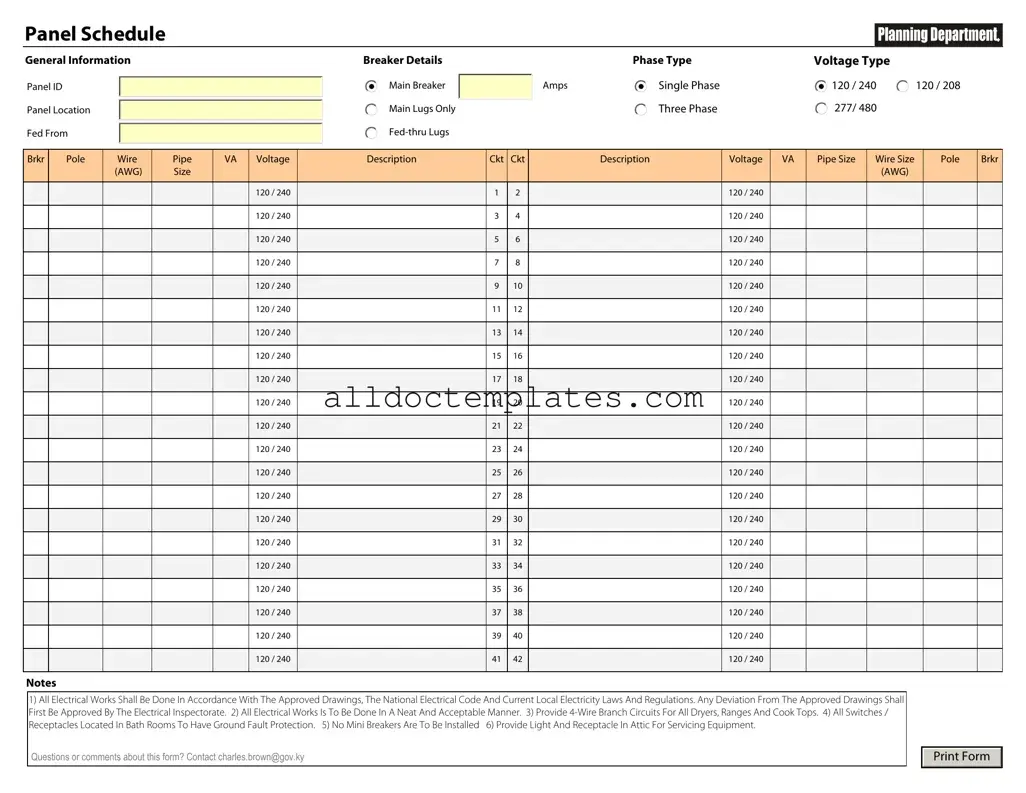
Panel Schedule
General Information
Panel ID
Panel Location
Fed From
Breaker Details
Main Breaker
Main Lugs Only
|
Phase Type |
Voltage Type |
|
Amps |
Single Phase |
120 / 240 |
120 / 208 |
|
Three Phase |
277/ 480 |
120 / 240 |
|
|
|
Brkr |
Pole |
Wire |
Pipe |
VA |
Voltage |
Description |
Ckt |
Ckt |
Description |
Voltage |
VA |
Pipe Size |
Wire Size |
Pole |
Brkr |
|
|
(AWG) |
Size |
|
|
|
|
|
|
|
|
|
(AWG) |
|
|
|
|
|
|
|
|
|
|
|
|
|
|
|
|
|
|
|
|
|
|
|
120 / 240 |
|
1 |
2 |
|
120 / 240 |
|
|
|
|
|
|
|
|
|
|
|
|
|
|
|
|
|
|
|
|
|
|
|
|
|
|
120 / 240 |
|
3 |
4 |
|
120 / 240 |
|
|
|
|
|
|
|
|
|
|
|
|
|
|
|
|
|
|
|
|
|
|
|
|
|
|
120 / 240 |
|
5 |
6 |
|
120 / 240 |
|
|
|
|
|
|
|
|
|
|
|
|
|
|
|
|
|
|
|
|
|
|
|
|
|
|
120 / 240 |
|
7 |
8 |
|
120 / 240 |
|
|
|
|
|
|
|
|
|
|
|
|
|
|
|
|
|
|
|
|
|
|
|
|
|
|
120 / 240 |
|
9 |
10 |
|
120 / 240 |
|
|
|
|
|
|
|
|
|
|
|
|
|
|
|
|
|
|
|
|
|
|
|
|
|
|
120 / 240 |
|
11 |
12 |
|
120 / 240 |
|
|
|
|
|
|
|
|
|
|
|
|
|
|
|
|
|
|
|
|
|
|
|
|
|
|
120 / 240 |
|
13 |
14 |
|
120 / 240 |
|
|
|
|
|
|
|
|
|
|
|
|
|
|
|
|
|
|
|
|
|
|
|
|
|
|
120 / 240 |
|
15 |
16 |
|
120 / 240 |
|
|
|
|
|
|
|
|
|
|
|
|
|
|
|
|
|
|
|
|
|
|
|
|
|
|
120 / 240 |
|
17 |
18 |
|
120 / 240 |
|
|
|
|
|
|
|
|
|
|
|
|
|
|
|
|
|
|
|
|
|
|
|
|
|
|
120 / 240 |
|
19 |
20 |
|
120 / 240 |
|
|
|
|
|
|
|
|
|
|
|
|
|
|
|
|
|
|
|
|
|
|
|
|
|
|
120 / 240 |
|
21 |
22 |
|
120 / 240 |
|
|
|
|
|
|
|
|
|
|
|
|
|
|
|
|
|
|
|
|
|
|
|
|
|
|
120 / 240 |
|
23 |
24 |
|
120 / 240 |
|
|
|
|
|
|
|
|
|
|
|
|
|
|
|
|
|
|
|
|
|
|
|
|
|
|
120 / 240 |
|
25 |
26 |
|
120 / 240 |
|
|
|
|
|
|
|
|
|
|
|
|
|
|
|
|
|
|
|
|
|
|
|
|
|
|
120 / 240 |
|
27 |
28 |
|
120 / 240 |
|
|
|
|
|
|
|
|
|
|
|
|
|
|
|
|
|
|
|
|
|
|
|
|
|
|
120 / 240 |
|
29 |
30 |
|
120 / 240 |
|
|
|
|
|
|
|
|
|
|
|
|
|
|
|
|
|
|
|
|
|
|
|
|
|
|
120 / 240 |
|
31 |
32 |
|
120 / 240 |
|
|
|
|
|
|
|
|
|
|
|
|
|
|
|
|
|
|
|
|
|
|
|
|
|
|
120 / 240 |
|
33 |
34 |
|
120 / 240 |
|
|
|
|
|
|
|
|
|
|
|
|
|
|
|
|
|
|
|
|
|
|
|
|
|
|
120 / 240 |
|
35 |
36 |
|
120 / 240 |
|
|
|
|
|
|
|
|
|
|
|
|
|
|
|
|
|
|
|
|
|
|
|
|
|
|
120 / 240 |
|
37 |
38 |
|
120 / 240 |
|
|
|
|
|
|
|
|
|
|
|
|
|
|
|
|
|
|
|
|
|
|
|
|
|
|
120 / 240 |
|
39 |
40 |
|
120 / 240 |
|
|
|
|
|
|
|
|
|
|
|
|
|
|
|
|
|
|
|
|
|
|
|
|
|
|
120 / 240 |
|
41 |
42 |
|
120 / 240 |
|
|
|
|
|
|
|
|
|
|
|
|
|
|
|
|
|
|
|
|
|
Notes
1)All Electrical Works Shall Be Done In Accordance With The Approved Drawings, The National Electrical Code And Current Local Electricity Laws And Regulations. Any Deviation From The Approved Drawings Shall First Be Approved By The Electrical Inspectorate. 2) All Electrical Works Is To Be Done In A Neat And Acceptable Manner. 3) Provide
Receptacles Located In Bath Rooms To Have Ground Fault Protection. 5) No Mini Breakers Are To Be Installed 6) Provide Light And Receptacle In Attic For Servicing Equipment.
Questions or comments about this form? Contact charles.brown@gov.ky
Print Form
Document Information
| Fact Name | Description |
|---|---|
| Purpose | The Electrical Panel Schedule form is used to document the layout and specifications of an electrical panel in a building. |
| Components | This form typically includes information about circuit breakers, load calculations, and wire sizes. |
| Compliance | Filling out the Electrical Panel Schedule is often required to comply with local building codes and electrical safety standards. |
| State-Specific Regulations | In California, for example, the form must adhere to Title 24 of the California Code of Regulations. |
| Utility Requirements | Utility companies may require a completed Electrical Panel Schedule before connecting power to a new building. |
| Updates | It is crucial to update the Electrical Panel Schedule whenever modifications to the electrical system occur. |
Electrical Panel Schedule - Usage Guidelines
After gathering all necessary information, you are ready to fill out the Electrical Panel Schedule form. This form will help ensure that all electrical components are properly documented. Follow these steps carefully to complete the form accurately.
- Begin by entering the project name at the top of the form.
- Next, fill in the address of the project location.
- In the designated section, provide the date the form is being completed.
- List the panel name or identifier in the appropriate field.
- Indicate the total number of circuits in the panel.
- For each circuit, fill in the circuit number, circuit description, and load rating.
- Ensure you include the main breaker size in the specified area.
- Finally, review all entries for accuracy before submitting the form.
Common PDF Forms
Four Point Inspection Florida - All forms submitted must meet minimum requirements for acceptance by underwriters.
To facilitate the formation of your LLC, it's vital to draft a solid operational foundation. For an in-depth resource on how to create an effective Operating Agreement template, explore this guide on operating agreements, which outlines key elements and considerations you should keep in mind.
What Is a W4 Tax Form - Rate the employee's technical skills relevant to their job.
Concert Band Seating Arrangement - Plan for any auxiliary instruments and their placements early.
Dos and Don'ts
When filling out the Electrical Panel Schedule form, it is essential to follow specific guidelines to ensure accuracy and compliance. Here are nine things to consider:
- Do: Double-check all information for accuracy before submission.
- Do: Use clear and legible handwriting or type the information.
- Do: Include all necessary details, such as circuit numbers and load calculations.
- Do: Ensure that the panel schedule is organized logically for easy reference.
- Do: Review local codes and regulations to ensure compliance.
- Don't: Leave any sections blank; fill in all required fields.
- Don't: Use abbreviations that may confuse the reader.
- Don't: Ignore the importance of including the date and your contact information.
- Don't: Submit the form without a final review for errors.
Common mistakes
-
Inaccurate Load Calculations: One common mistake is miscalculating the electrical load for each circuit. It's crucial to assess the total wattage of all devices connected to a circuit. If the load exceeds the panel's capacity, it can lead to overheating and potential fire hazards.
-
Omitting Circuit Descriptions: Some individuals fail to provide clear descriptions for each circuit. This can create confusion during maintenance or troubleshooting. A detailed description helps electricians quickly identify the purpose of each circuit, ensuring efficient repairs and upgrades.
-
Ignoring Breaker Ratings: People often overlook the importance of matching breaker ratings with the load requirements. Using a breaker that is too high can prevent it from tripping during an overload, which poses a significant safety risk. Ensuring the correct ratings is vital for safe operation.
-
Neglecting to Update the Schedule: After making changes to the electrical system, individuals sometimes forget to update the panel schedule. This can lead to outdated information, making it difficult to track changes or identify potential issues. Regular updates are essential for maintaining an accurate record.